Looking for easy tips on making a small home office feel bigger? We have you covered. Let’s face it, for most of us, the home office is the smallest room in the house. It’s a space you probably had to cobble together back in 2020, …
New Africa/Shutterstock VSCO is an aesthetic that started out like any other trend. It went soaring in no time and is still widely used and popular today. According to Parade, this aesthetic started in 2011 and first began with a simple photo editing app. This …
When it comes to classic colour combinations, white and grey living room ideas are hard to beat. Easier on the eye than monochrome black and white, the pairing of easy-going grey with calming white combines the warmth of neutrals with the simplicity of white and makes a versatile backdrop for pretty much any style of living room, whether traditional or modern.
White and grey living rooms also offer plenty of options when it comes to accent colours, which are an easy way of switching up a scheme whenever you fancy a new look. Whether soft pastels, rustic naturals, muted metallics or jewel brights, most accent colours sit equally well against a backdrop of grey and white, making it easy to make seasonal changes without the need for any major redecoration.
White and grey living room ideas
White is the biggest-selling paint colour, closely followed by grey, so combining white with grey living room ideas is a natural fit. Whether dark, moody shades of grey with crisp white as a bold contrast, or soft and subtle barely-there greys that blend in with calm, chalky white tones, there are endless options.
‘Grey is an incredibly versatile colour with a breadth of base tones,’ says Ruth Mottershead, Creative Director at Little Greene (opens in new tab). ‘There are many shades of grey to choose from to create your perfect scheme. To add warmth, consider warm yellow or red-toned greys, or for a cooler scheme, explore greys with a blue undertone.’
1. Create calm with a soothing grey and white scheme
(Image credit: Future PLC/Dominic Blackmore)
For a timeless but modern look, start your living room scheme with a soft, mid-toned grey as a neutral background colour on walls, flooring and window treatments. Using the same colour throughout your living room ideas creates calm by day, but feels relaxing and warm in the evening.
Working in plenty of white will prevent a neutral grey scheme from feeling too bland, with paintwork and trims in low-sheen white, a sofa or armchair in off-white to add larger areas of block colour and then ceramics, artwork and accessories around the room providing accents of glossy white.
‘Greys are hugely versatile – from cool off white shades, through warmer neutral mid tones to the very deep and mysterious,’ says Justyna Korczynska, senior designer at Crown (opens in new tab). ‘They have more colour and texture within them than straight black. A monochrome scheme of black and white is much more unforgiving than one of shades of slate, clay and off-white which will change subtly with the light throughout the day, giving them personality and character.’
2. Add warmth with moody greys
(Image credit: Future PLC/Dominic Blackmore)
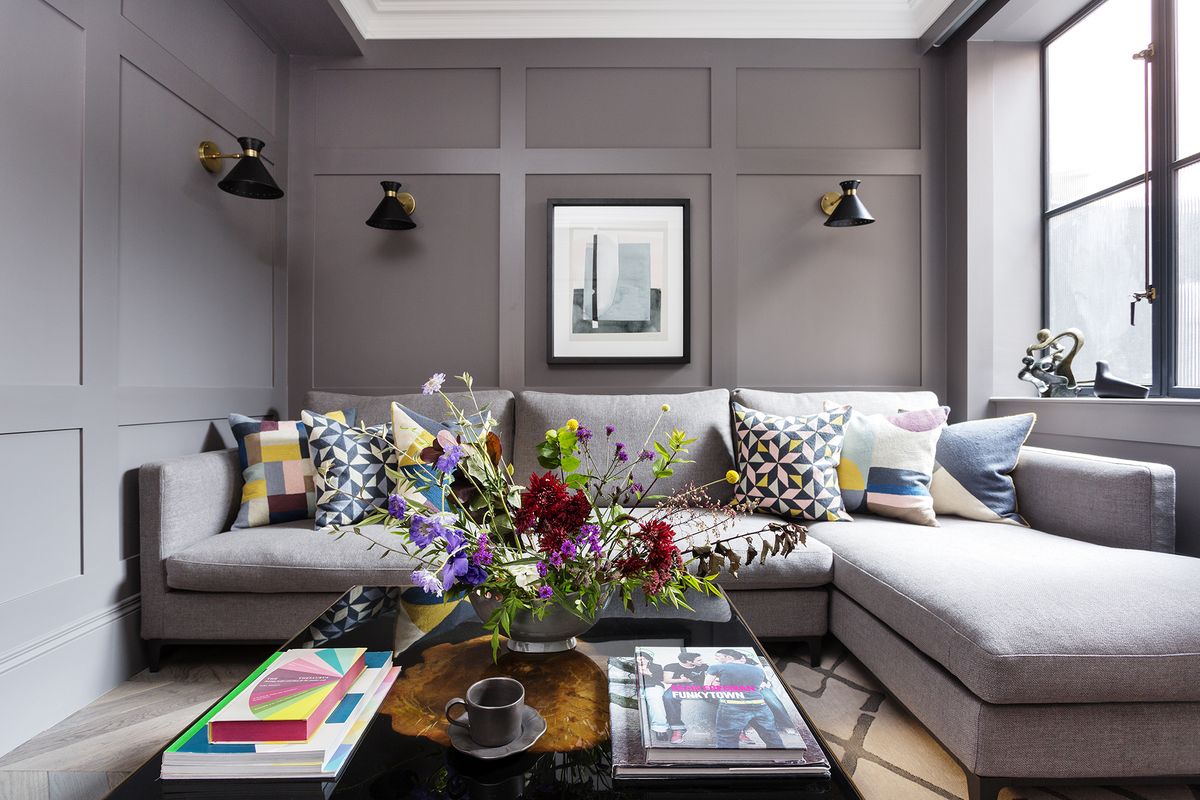
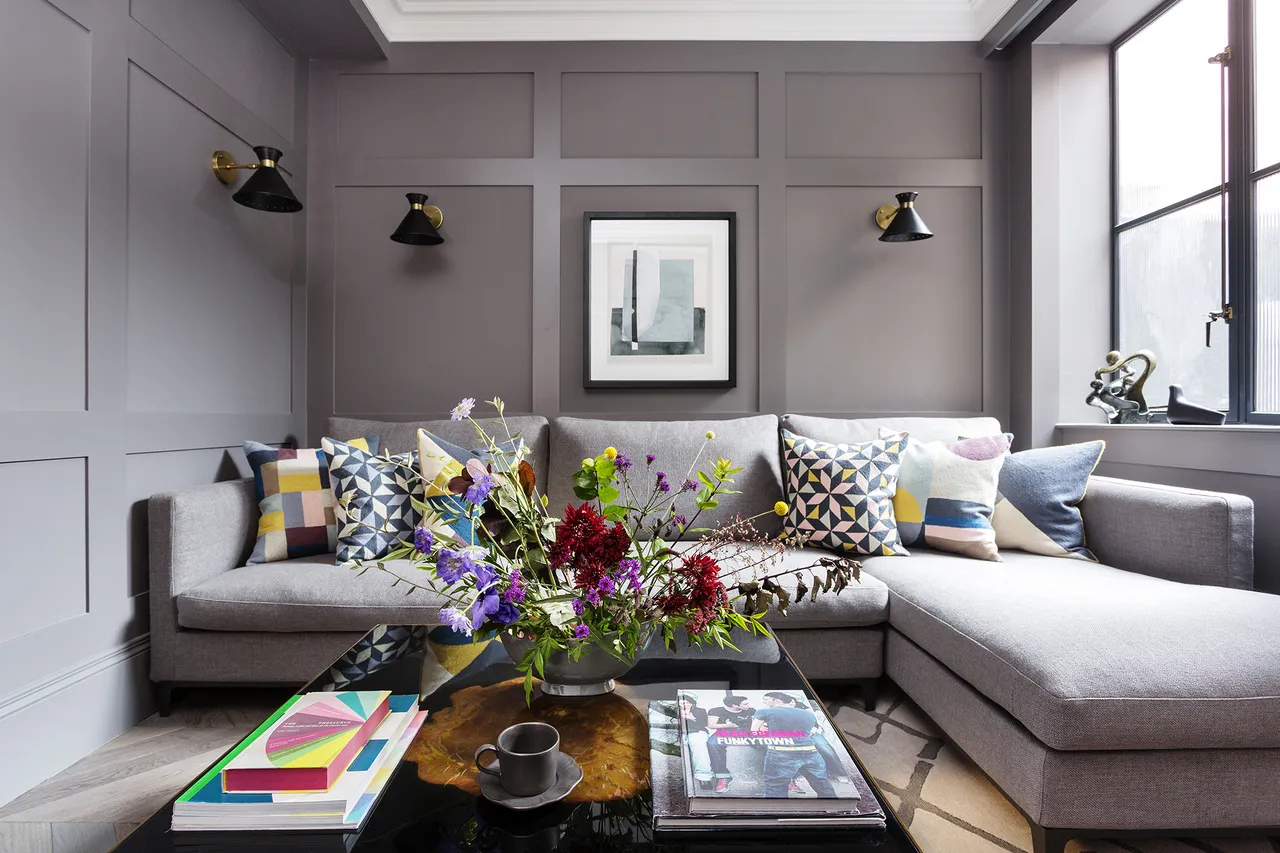
Choosing darker tones of grey as a living room wall colour will make it feel cosy, enveloping and super-snug in the evening. Just be sure to choose the right shade of grey, depending on the light qualities of your living room. Warm-toned greys are best grey paint for walls in north-facing rooms and cool-toned greys in south-facing living rooms.
Bringing white into the mix can help break up the intensity of grey so that it doesn’t feel too dark and overpowering. Try painting woodwork, trims, doors and fireplace a soft white as a contrast to moody grey, with a paler-coloured rug or flooring to add balance.
‘Darker tones of charcoal can be used to add drama anywhere in the home, from a living room to a bedroom or even a small hallway,’ says Justyna Korczynska. ‘With clever lighting and mirrors you can create a look that is both strong and atmospheric. These dark greys are also a perfect strong background for small amounts of brighter colour, like chartreuse or mint.’
3. Lighten the mood with pale grey and white
Main wall: French Grey Dark Absolute Matt Emulsion, £52 for 2.5ltr; Panelling French Grey Intelligent Matt Emulsion, £56.50 for 2.5ltr; Little Greene
(Image credit: Little Greene)
Small living room ideas will benefit from the combination of a white and grey colour scheme. Soft grey walls teamed with white low-sheen paintwork brings light-reflective qualities that will make a small living room feel more spacious and create a calm and restful look to boot.
Off-white upholstery will also help to lighten the mood in a small space – and by choosing loose slip-covers that are easy to pop in the wash, pale-coloured seating isn’t a worry. Balance the scheme with furniture evenly positioned across the space so that the room doesn’t feel one-sided. Adding a large mantel mirror will add light and increase the sense of space with plenty of reflective glass and glossy ceramics to accessorise.
‘Hectic lives call for calming spaces and neutral hues,’ says Ruth Mottershead at Little Greene. ‘For a cooler combination, paint walls in French Grey Dark, highlighted with French Grey Pale, which will both calm a scheme and expand the feeling of space, ideal for smaller living rooms. Keep the look fresh with crisp white on woodwork and ceilings.’
‘When browsing our greys, consider the selection of colour combinations offered on each paint page,’ adds Ruth, ‘with hand-selected whites, neutrals and darks for every shade, alongside coordinating hues and contrasting accents.’
4. Create a backdrop for greenery
(Image credit: Future PLC/Jo Henderson)
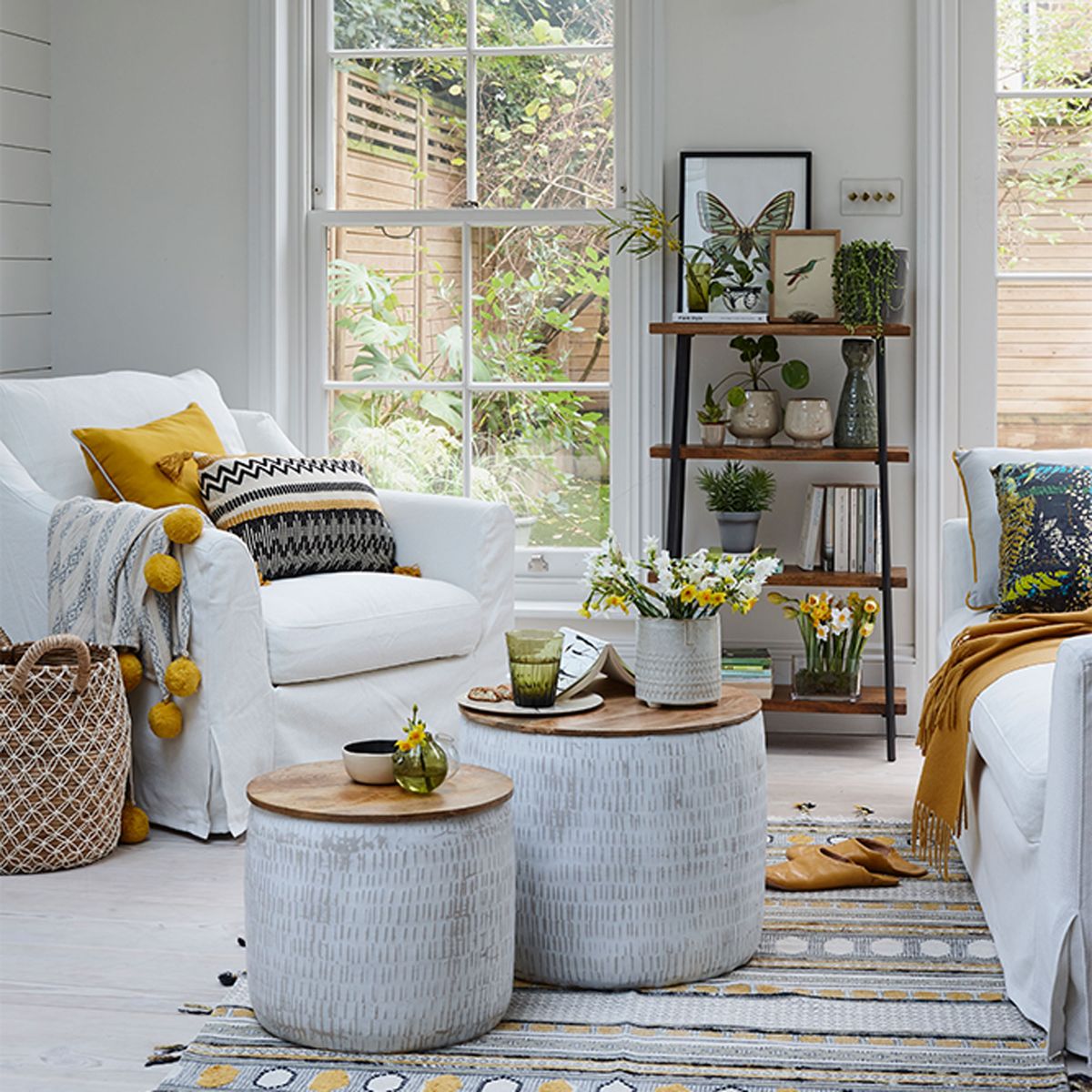
All-white living room ideas can feel quite stark and clinical, so opting for a combination of cool white and pale grey on walls can be a good compromise that will feel warmer, more relaxed and easier on the eyes than harsh brilliant white.
In living rooms that get lots of natural light, with large windows or French doors, opting for a cool-toned pale grey will boost the feeling of space, but also help to balance out any excess brightness coming in. Soft greys and whites make a great backdrop for greenery in an indoors-outdoors space like this. Lush, leafy greens, foliage and warm sunny yellows will shine against a calming backdrop and help bring energy to the space.
5. Bring in soothing accent colours
(Image credit: Future PLC/Dominic Blackmore)
When it comes to colour palettes, white and grey can be treated much like neutrals, which means they are the perfect foil for other colours, whether its bold brights teamed with darker greys, or softer pastel shades paired with soft silver greys and calm whites. Keeping to accent colours of the same tone and intensity will create a more harmonious scheme than using very contrasting colours.
An easy way of giving an all-white living room a speedy update is to add accent areas of soft grey in key places. Alcoves either side of a fireplace are an obvious option that will add impact without overwhelming the space – and why not try painting a plain fire surround to match. Keeping colours consistent will help pull the scheme together, with a mantel styled-up with pretty pastel pieces that complement cushions and soft furnishings.
6. Introduce texture and colour to a plain scheme
(Image credit: Future PLC/Dominic Blackmore)
Calm greys and soft white make a super-flattering backdrop, but to prevent a grey scheme from looking too flat or feeling bland, it’s essential that areas of contrast and accent colour are introduced into the mix.
Texture is an easy way of adding visual contrast and a tactile element to a living room, which will make it feel comfortable and welcoming. Pile up living room sofa ideas and armchairs with a mix of cushions and throws in textured knits, woven fabrics and fleeces. Swap plain curtains and blinds for a lively pattern or striking print and put down a textured rug in front of furniture to give the space a visual landing point.
7. Make pattern the focus
Hampstead wallpaper, £82 per roll, Little Greene
(Image credit: Little Greene)
Paint isn’t the only option when it comes to putting a chic living room scheme together. Pattern is the perfect way of adding some punch to a calm grey and white colour scheme and will give a plain living room a visual lift while still keeping colours low-key.
Reserve a patterned wallpaper for the prime spot behind a sofa or other large piece of living room furniture, such as a sideboard or display unit as a smart living room wallpaper idea. A lively wallpaper print looks eye-catching, but won’t overpower the space in a soft grey and white combo, making it the perfect backdrop for a white statement sofa and side table.
8. Try a scheme of two halves
(Image credit: Danetti)
Opting for warm-toned grey walls is a great way of bringing some bolder colour into a cold north-facing living room and is guaranteed to take off the chill and make the space feel cosier. But if wall-to-wall dark grey feels too intense, temper it by bringing in areas of white in equal measure for a more balanced look.
Introduced a living room wall panelling idea with half panels. They look super-stylish and are a practical option too, as it’ll protect walls from being knocked and damaged. Painting the top section of wall a darker grey will provide a contrast backdrop that’s perfect for showing off artwork, prints or gilt mirrors, while panelling and painting the lower section a soft silky white, will showcase a darker-coloured sofa and make brighter display pieces pop too.
9. Merge background colours for a calm look
(Image credit: Future PLC/David Brittain)
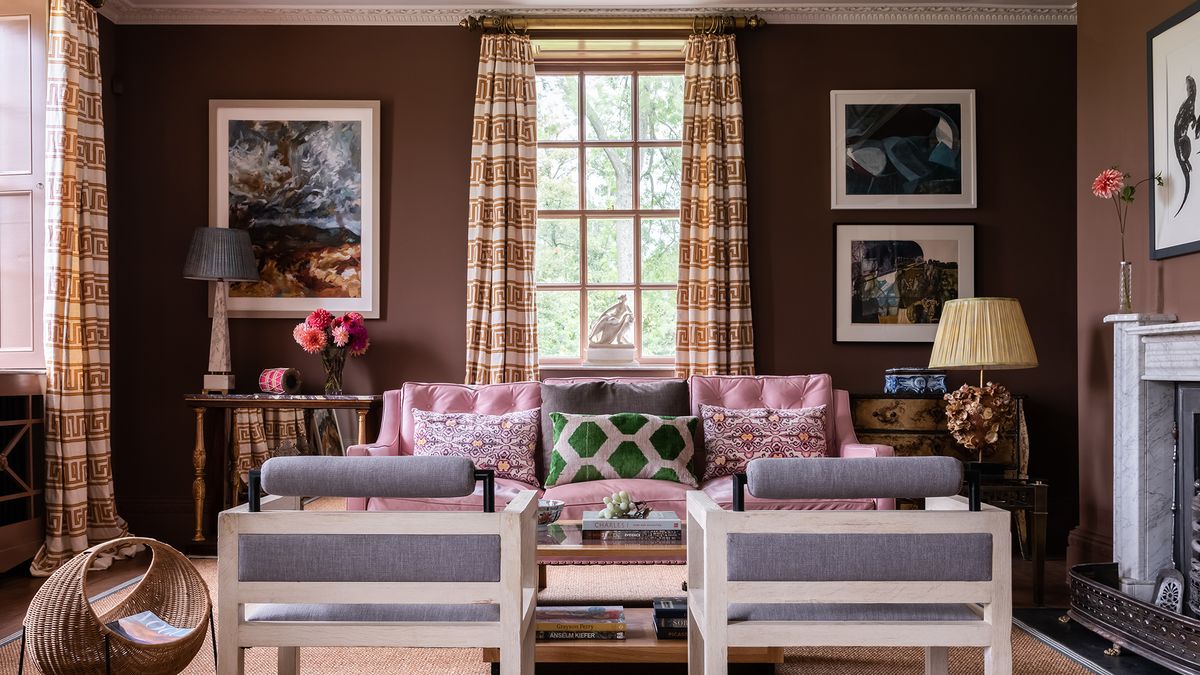
For a more relaxed and muted option to cool grey, consider using ‘greige’ as a partner to white. With warm undertones that give a restful look, greige makes the perfect background colour and can be easily prettied up by mixing in accents of soft blush pink and sage green.
Paint walls and woodwork throughout to create a calm, cohesive look. Freestanding shelves painted to match walls will blend in seamlessly and take on the look of pricier fitted furniture. While off-white upholstery adds subtle contrast against greige and looks relaxed dressed up with linen cushions. Finish off with a large-scale wall canvas to tie the look together in soothing shades of pink and green.
‘Painting skirting boards and window frames to match the wall colour is also a simple but stylish touch for the living room,’ says Justyna Korczynska. ‘Not only does this create a contemporary, monochromatic look, but it is also an easy way of creating the illusion of bigger walls, making the room as a whole appear more spacious.’
10. Use prints to perk up a plain scheme
(Image credit: Future PLC/Dominic Blackmore)
Opting for paler shades of grey and white in a living room will inevitably feel calm and relaxed, but bringing in colour and pattern in small doses will prevent a pale colour scheme from feeling flat and too one dimensional.
Curtains and blinds can be a good place to start if you’re not sure how to introduce pattern or colour into your scheme. Choosing a medium-scale pattern, rather than a large or small-scale print, will add just the right amount of visual interest without overpowering the room. Then bring in extra complementary patterns on cushions, artwork, rugs and ceramics to tie the decor together. Mix it up with patterns of medium and small-scale for a lively look, but keep to just a few key colours for a co-ordinated look.
What colours go well with grey and white?
Grey and white fall into the neutrals category, so pretty much any colour can be partnered with them, depending on the look you want to go for. Neutral colours are muted shades that appear to lack colour, but often have underlying hues that change with different lighting. Examples of neutrals, include grey, greige, beige, taupe, stone, brown, black and white, and while you won’t find them on a colour wheel, they complement primary and secondary colours.
For bolder complementary colours that go well with grey and white, consider fiery red, mustard yellow, emerald green or black. These colours are guaranteed to create a scheme with impact. Or take a calmer approach by teaming grey and white with soft pastels, rustic naturals or muted metallics for a more low-key look.
Does wood go with grey and white?
Wood is a natural when it comes to finishes that look great with grey and white and most tones, grains and colourings of wood will work well. Light-toned blonde woods like beech, birch, ash and maple, can create a Scandi vibe and look good in large doses against pale greys or used as accent wood with dark grey and black. Darker woods, such as oak, teak, wenge and mahogany, will add warmth and richness to a scheme and can suit darker greys and a more formal living room scheme.
Plan your residing area efficiently with Devika Khosla, Innovative Director of The Will work Interiors Function courtesy GoodHomes Now, the residing home has develop into a adaptable room in every residence. For the earlier couple of years, most of us have experienced to function from …
Decorating with brown is not always an obvious choice, and in the past it has had a reputation for being outdated. However, in recent years brown has become increasingly popular with those looking for a grounding, earthy neutral to bring warmth to interiors. With a …
You might be decorating a home on a budget because you’d far rather spend your earnings on jetting off to sunnier climes. Or perhaps you’re saving up for a big life event – wedding, baby, first home. Or maybe the cost of living crisis is beginning to bite but you still want your home to feel stylish and elegant? Or, perhaps you just love to know the cleverest of design tricks, cost-effective or not?
Interior transformations don’t always have to be grand affairs. Instead, they can be slowly curated through small updates that don’t break the bank but leave your home feeling lusher.
Here, some of our favorite interior designers offer their home decor ideas, advice and expertise for decorating your home on a budget.
Interior design on a budget
Whilst it is essential to set an interior design budget and stick to it, it is also important to design a home you will love.
From clever tricks with mirrors and paint to upcycling advice, our designers’ beautiful but economical decorating ideas will help you decorate a house on a budget to create a luxury look for less.
1. Use quick paint tricks for big impact
(Image credit: Future)
Using clever paint tricks is the easiest, most cost-friendly way to add color, layering and a touch of flair to any room.
‘Paint is such an easy and affordable route to an instant effect – every room has more wall than anything else,’ comments Martin Waller, founder of designer furniture store Andrew Martin (opens in new tab). ‘I often think that people don’t pay nearly enough attention to their walls, spending months researching fabric but only minutes choosing paint.’
While luxury color schemes typically lean towards rich neutrals, Martin suggests otherwise, especially in smaller rooms: ‘Small rooms often benefit from the most dramatic color schemes – many people think a small space should be painted in a pale, plain finish but I think a small space needs more not less emphasis.’ Opting for a bolder scheme creates a lavish, intimate atmosphere.
Or you can try the trick interior designer Suzy Hoodless has used in her living room, above. Simply use a bold, contrasting color to pick out trim. This accent color can then be picked up again elsewhere in the space with the odd accessory, creating a cohesive look in an otherwise plain space.
2. Reuse and refurbish
(Image credit: Annie Sloan)
Whether it’s a antiques market find, an inherited piece or simply something you’ve been longing to replace, giving an old piece of furniture a new lease of life can be a good trick to have up your sleeve when decorating a house on a budget.
This can mean repainting wooden furniture or reupholstering worn or out-of-date soft furnishings. This is also a sustainable way to update your home and add a touch of personality whilst extending a piece’s lifespan.
Louise Wicksteed, design director at Sims Hilditch (opens in new tab), emphasizes the impact giving existing furniture new looks can have: ‘Reupholstering and repairing existing furniture is a great way to refresh a room, without the expense of replacing entire pieces every few years,’ she states.
‘Part of the Sims Hilditch ethos is to reuse and refurbish wherever possible, bringing new life into old pieces for posterity. This might be antique dining chairs, sofas or armchairs that need reupholstering, or family portraits that need cleaning and reframing ready to be passed down to the next generation.’
3. Be clever with wallpaper
(Image credit: Susie Atkinson)
Paint may be a quicker solution for decorating a house on a budget, but wallpaper ideas are a great way to add a feeling of layered luxury at a minimal cost. And while wallpaper can add color and pattern to your scheme – always guaranteed to make a space look more luxurious – you needn’t use it on all four walls if you are looking to decorate on a budget. Living room feature wall ideas are one way to go, or you could copy the clever and cost-effective trick above by designer Susie Atkinson (opens in new tab) and use wallpaper borders to highlight architecture.
‘To add a feel of luxury to a space is the use of wallpaper; although not cheap per se it can bring an interesting, textural addition to any room, especially one of our metallic prints, and you only have to commit to one wall too so three rolls should be more than enough for most room makeovers,’ advises Farrow and Ball (opens in new tab) brand ambassador Patrick O’Donnell.
4. Make architecture more interesting with DIY panels
(Image credit: Zulu Fish)
DIY wall paneling ideas can make drab architecture look much more intriguing.
‘Whilst we all review our budgets and prioritize where to spend, one way to help elevate a room from the mundane to something more glamorous can be judicious use of finishes.’ suggests Farrow and Ball (opens in new tab) brand ambassador Patrick O’Donnell.
‘Creating “paneling” with economical strips of timber, mitered for neat joints and painted in our Modern Eggshell will bring a little sophistication to a once drab, plain wall.‘
5. Emphasize art with clever lighting
(Image credit: Kitesgrove / Mark Bolton Photography)
Art is often seen as the most powerful accessory to any room. Luckily, artwork has become increasingly accessible over the last few years and it is even easier to chose art for your home. It is no longer about spending thousands on a well-known artist but finding pieces that resonate with you and your family.
No matter the artwork, how you display it has a massive impact on the final look and feel of your home. When decorating a house on a budget, lighting art is a great way to highlight the piece and create a focal point in any room. There are many ways to achieve this, from impactful, as above, to subtle.
‘My favorite way to light art is by using LED picture lights, which are clever enough to contain the light purely on the canvas, rather than lighting the wall around it.’ says leading designer and founder of Guy Goodfellow Design (opens in new tab), Guy Goodfellow, ‘Instead of having brassy picture lights, which we’ve seen enough of, a great trick is to paint the picture light in the same color as the wall. You don’t visually register them and only when they’re on in the evenings do you see them.’
6. Hunt for vintage finds
(Image credit: Jody Stewart)
Vintage decor has made a welcome return to interior design in the last few years. From traditional pieces to contemporary antiques, finding hidden gems in antiques’ stores is the perfect way to add character and a touch of luxury when decorating a room on a budget.
‘There’s real pleasure in foraging for a special piece, and potentially getting a bargain or something unique that can’t be bought on Amazon or at a department store. Look for pieces that speak to you, which add an element of curiosity so that they bring character to a room,’ adds Matthew Williamson of Matthew Williamson Design (opens in new tab).
7. Give new life to leftovers
(Image credit: Future PLC/Polly Wreford)
Not only is reusing or repurposing materials a sustainable way of approaching design, but also an effective way of approaching the decoration of a house on a budget.
Tiles left over from a project elsewhere in the house, for example? Use them to add pep to a space that needs a lift.
‘We have to start changing the way we use materials’ she states, ‘Leftover tiles or tile offcuts can be easily inserted into joinery pieces – an easy way to jolly up a very boring closet door.
‘One of the fun things we’ve been doing with leftover parquet is cutting it up quite thinly to use as almost light marquetry. We make decorative parquet panels to use as insets and the resulting geometrical effect is very interesting to look at.’
8. Limit stand-out finishes to showpiece spaces
(Image credit: Naked Kitchens)
‘This is one of my favorite tricks for decorating a home on a budget,’ says Homes & Gardens‘ Editor in Chief, Lucy Searle. ‘In fact, it’s one I’ve used myself many times over the years in the many homes I’ve rented, owned and renovated. And that is to save where you won’t notice and spend where you will.
‘This could mean anything, from stinting on the finishes in a spare bedroom that’s barely used, and spending on beautiful backsplash ideas in the kitchen diner of your dreams. Or perhaps you can choose cheaper fabrics for curtains, but have them trimmed to look more expensive. It’s all about being clever with the budget you have.’
9. Reconsider your curtains
(Image credit: Paul Raeside)
There are so many curtain ideas that can be incredibly versatile when it comes to design and can really help make a space feel more luxurious – even on a budget.
‘Curtains are one of the first things I think about in a room; they are an amazing canvas to play with’ says Charlotte Rey, of Campbell-Ray (opens in new tab). ‘Curtains don’t need to be just for windows, they can also be decorative and transform a corridor with a hard exit into a space that feels softer and more embracing.’
Playing with different elements on curtains, or even adding features to your existing drapes is a great way of playing with interior design on a budget. ‘I love tassels,’ Charlotte continues, ‘the right ones can be sensual and a bit sexy. They add a level of finish to a room that feels special.’
10. Switch out your lamps
(Image credit: Davide Lovatti)
Switching out your shades and revitalizing lamp bases can be an effective way of sprucing up your space without spending out on new light fixtures. Designer Penny Morrison (opens in new tab) emphasizes her love of lighting for creating a luxury space, ‘I love to add color and pattern using lamp shades – the bigger and more vibrant the better, as they make the room look much grander.’
‘Create statements out of your lamps and shades to express effortless sophistication’, she continues. ‘They exude charm, elevating elegance and add personality to any room.’
11. Layer pattern and texture through soft furnishings
(Image credit: Damian Russell)
Layering is a great way of achieving a luxury, high-end finish even on a budget. ‘This year we’re embracing a wide variety of materials to create an uber-luxe and inspirational space,’ says Martin Waller of Andrew Martin.
Consider layering patterns and textures through soft furnishings such as cushion covers and throws – both of which are practical and pretty ways to update your space on a budget.
‘We like to layer patterns, big and small, in a room so that it creates interest without the eye settling on one thing for too long’ says Bunny Turner, co-founder of Turner Pocock (opens in new tab), ‘It’s important to work with different scales of pattern – like large floral with smaller geometric – as it allows each one to stand out.’
12. Use mirrors to enhance your spaces
(Image credit: Alexander James)
‘The power of decorating with mirrors can’t be under-estimated,’ says Lucy Searle. ‘It can make a small, dark room feel instantly larger and lighter, give you wonderful reflected views and is said to improve a room’s energy.
‘My particular favorite trick that designers regularly use is to put lighting in front of mirrors, especially in living room or bedroom alcoves. Doing so creates a real luxe look.’
13. Add personality with bespoke furniture
(Image credit: Brent Darby)
While commissioning bespoke furniture might not sound budget-friendly, Robert Stephenson of London-based furniture designers and upholsterers Sedilia (opens in new tab)believes that you can’t go wrong with personal pieces in the long-run. It’s all about the buy well, buy less school of thought and investment in timeless pieces you’ll love forever over cheaper items that will fall apart or you’ll fall out of love with in the quickly.
‘Don’t be afraid to have an open and frank dialogue about the budget,’ Robert recommends. ‘When discussing your brief, make clear what is important. For example, if it has got to be super comfortable, ask your maker to place particular importance on that. Or if it just has to look fantastic but won’t be used very much then ensure the finishing is perfect.’
What makes a home luxurious?
A luxurious home uses several elements that work together towards a put-together effect. Consider adding layers to your design through smaller elements such as books and candles adorning coffee tables, or finding the perfectly sized rug for a room.
It is the details that make a home feel personal and complete.
How do I make my home elegant on a budget?
Elegance is about finding a careful balance in your home. An easy way to create a dignified space is through paint – choose understated hues for a calming yet expensive effect.
Lighting and hardware are also important considerations when it comes to improving the overall look of your home. It is easy for these elements to look cheap or stand out for the wrong reasons so look out for high-end materials in antique stores for more affordable prices and pieces that tell a story.