Left to ideal: Barbara Elliot, Jennifer Ward Woods, Monique Holland, Erin Jenkins, Laura Outland, Lynne Lawson EASTON, Md. — Designer of the Year, presented by Decorating Den Interiors, has been awarded to franchise owner Monique Holland of Washington D.C. This was the company’s 38th International …
Scandinavian decor ideas are popular for several reasons: pared-back, unfussy, uncluttered spaces – and a winning combination of form and function create aesthetically pleasing, yet practical interiors. The combination of clean lines, a light and bright ambience, and natural materials that typify one of these rooms has enduring appeal, after all.
With busy modern lives, homeowners are now more aware of their furniture choices and aim to find a balance between streamlined minimalism and luxurious comfort for their decorating ideas.
Here we explore the very best of the Scandinavian décor trend – and how to effectively and beautifully use this popular interior design aesthetic in your home.
Scandinavian decor ideas – how to embrace this minimalistic trend
What is Scandinavian design, you ask? Expect to see Nordic influences presented in their most refined form yet. Clean lines, sleek surfaces and a neutral palette strike a sophisticated smart-casual balance.
Adopt Scandinavian design principles to create a space that is focused, functional, and features only a few meaningful and cherished items.
Here we look at the different features as well as the aesthetic of Scandinavian design, with expert guidance to help inform a new room.
1. Add subtle interest and detailing
(Image credit: Paul Massey)
The lines and crosses of this Scandinavian living room ceiling reveal the beauty of its structure and architecture, and create a lively counterpoint to the calm space below.
In old houses it can pay to investigate the original ‘bones’ of the house though it is important to consider the condition ceilings may be in if you expose them.
The use of white paint here may have helped to conceal flaws as well as create a softer effect that blends in with the room. This versatile neutral is one of the most popular paint ideas for Nordic interiors, and it is easy to see why. Decorating with white offers a blank canvas that illuminates dark spaces –a common issue in Scandinavian countries – and can make even small rooms feel spacious, light and bright.
2. Work wood into your design
(Image credit: Sola Kitchens)
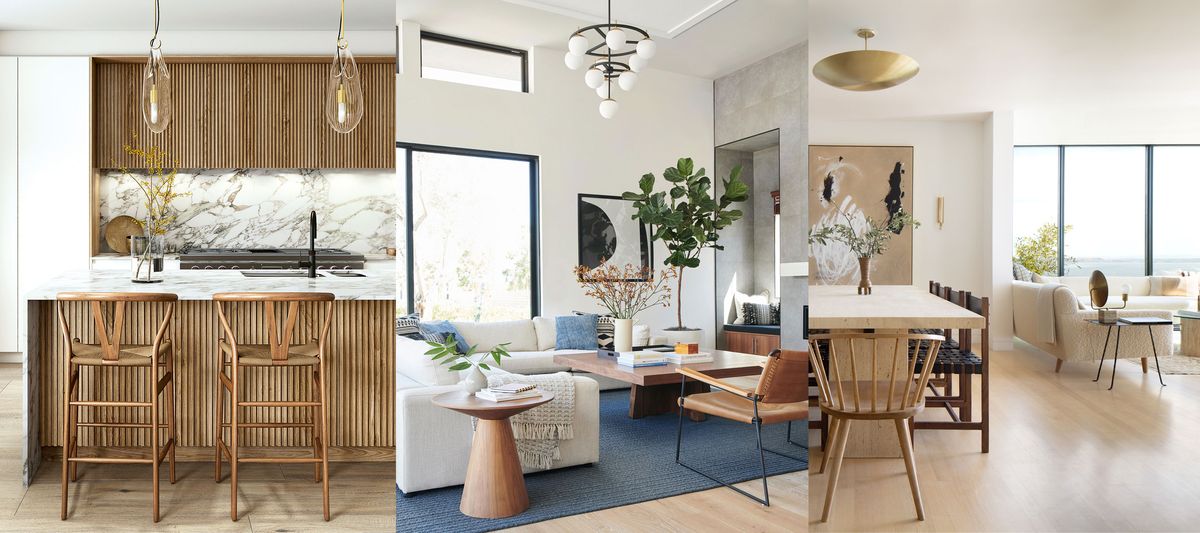
Wood is a staple in a Scandinavian kitchen, but this season it is being reinterpreted with fresh and interesting techniques.
Here, three-dimensional surfaces that shift with the light bring a modern twist to wood in the kitchen. ‘Combined with sleek flat-fronted doors in crisp white, thin vertical wood slats provide texture and depth, enhancing the tension between plain and pattern,’ explains Sofia Bune Strandh, CEO, Sola Kitchens (opens in new tab).
SKOG, meaning ‘forest’ in Swedish, is the name given to this striking new wood-focused design from Sola Kitchens. ‘It’s called SKOG partly because the wooden slats resemble the outlines of trees, but also the name reflects the embracement of natural materials – a typical quality of Scandinavian design,’ she adds.
Evoking purity and cleanliness alongside confidence and sophistication, white bedrooms ideas are a timeless choice for a true Scandinavian scheme.
‘The reason people like white room ideas is because it is so versatile,’ says artist and color expert Annie Sloan (opens in new tab). ‘There are so many varying shades of white from warm white to cool white and the great thing about decorating with it is that whatever your style of interior – be it contemporary or country – white-on-white is a scheme that is guaranteed to look chic in a Scandinavian bedroom.’
Designed by Lucie Ayres, founder of 22 Interiors (opens in new tab), this space utilizes texture to perfection. Texture in interior design is vital, and is not simply just about how décor and soft furnishings feel, but it’s also about ‘visual texture’ – using different materials to add interest and breathe life into a room. This is an important element of the Scandinavian design ethos.
4. Put the focus on furniture
(Image credit: Sarah Shields Photography / Whittney Parkinson Design)
The main purpose of Scandinavian design is to improve daily life. Furniture is therefore not only about stylish elegance, but also about functionality – it should serve a purpose and stand the test of time.
‘Select a few key pieces of furniture in each room that look good but also work hard, paired with a few carefully chosen accessories, fittings or soft furnishings to tie the room together,’ says interior designer Whittney Parkinson, founder, Whittney Parkinson Design (opens in new tab).
For a Scandinavian sunroom, for example, a comfortable sofa and chair, simple floor lamp, a few large carefully placed houseplants, a woven rug, and accent cushions works well. Remember to only make space for items and furnishings that you truly love.
5. Go for a monochrome color palette
(Image credit: Sarah Shields Photography)
As a rule, Scandinavian design is simple and minimalist. When it comes to color, Scandinavian kitchens major in light hues for a practical reason – think white kitchen ideas or wood kitchen cabinet ideas in paler finishes. ‘The Scandinavian countries are very dark in the winter and light colors and materials will reflect the little light there is,’ says Sofia Bune Strandh, founder of Sola Kitchens (opens in new tab).
A black and white decorating scheme is a brave choice, as it requires careful editing and a strong design eye. This type of Scandinavian interior can also appear ‘flat’ if you don’t introduce texture and subtle tonal variety. But put together carefully, it’s a great way to add drama and style. ‘The client had one request for this space: black, white with a little warmth, says Whittney Parkinson. ‘We achieved this by using a mix of wood finishes and paint colors. It really is a triumph of the senses. ‘
6. Instil a Scandinavian serenity in a work space
(Image credit: Mary Wadsworth)
The home office is one room that has become essential in many of our spaces. Even though we all have different work styles and needs, there are some fundamental principles to follow.
Consider a calm color scheme that stimulates and allows you to get focused,’ says interior designer Bobby Berk (opens in new tab). ‘For me, that means decorating with clean white walls and minimal color, often associated with Nordic design principles.’
‘When I work I like to eliminate visual distractions and lots of ‘stuff’ – piles of paperwork and materials on a desk not only look messy, but they can also pull focus from the task at hand,’ he says. ‘Letter trays and filing containers keep clutter at bay, and, if you have the space, a cabinet allows you to keep that extra ephemera organized and out of sight.’
In this scheme, Irene Gunter of Gunter & Co (opens in new tab) has cleverly combined materials and textures to create contrast and a sense of dimension. A room without a lot of color can tend to look really flat when you stick with similar materials. That’s why it’s best to bring in warm wood tones, stone and textured accessories that will create a sense of depth.
7. Keep your space minimal and uncluttered
(Image credit: JDP Interiors / Bess Friday)
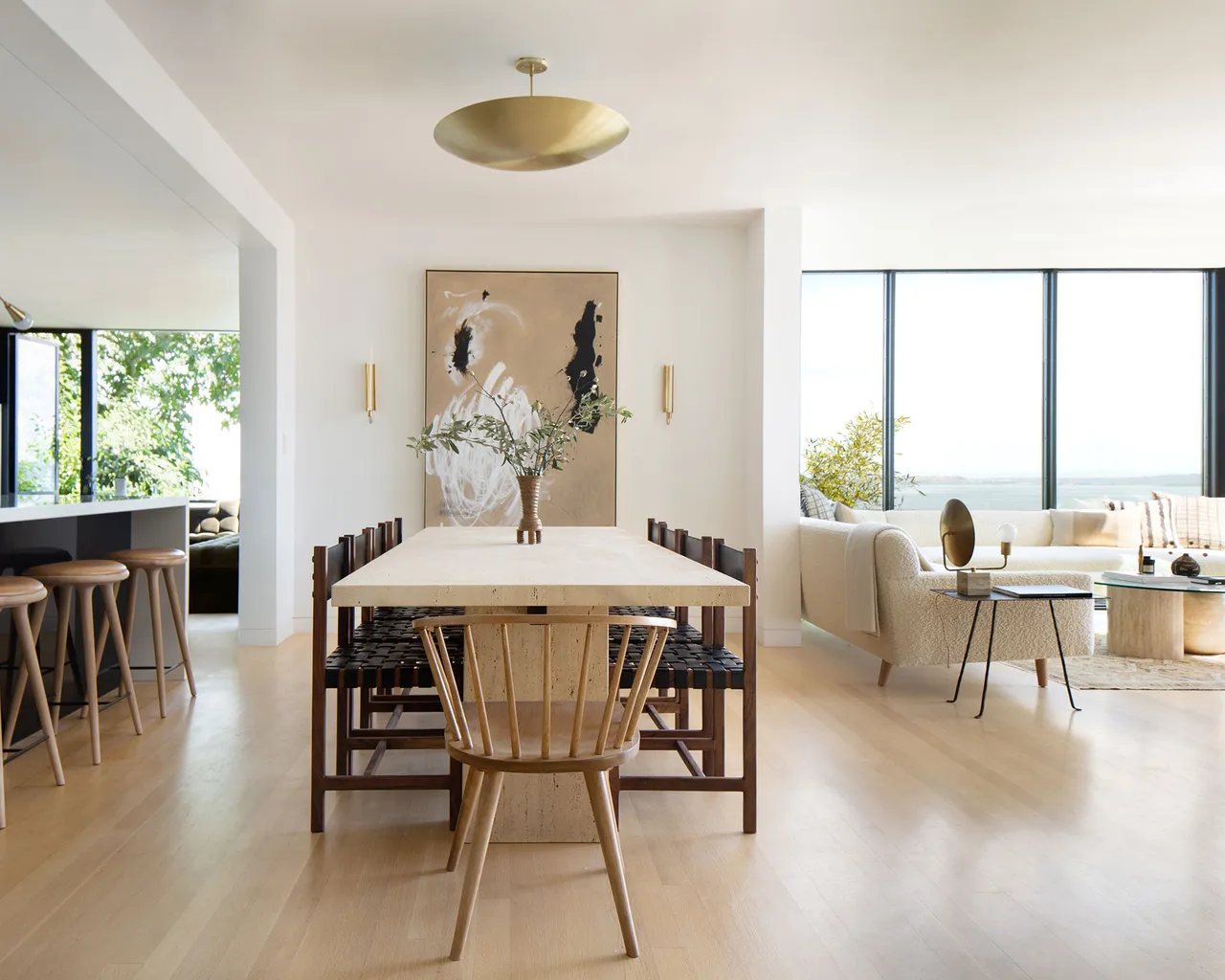
Designed by Joyce Downing Pickens of JDP Interiors (opens in new tab), this Scandinavian-inspired space in the Russian Hill neighborhood of San Francisco is a minimalists masterpiece.
Minimalist living room ideas and Scandinavian décor ideas go hand-in-hand, so it pays to keep your color choices simple, understated and fuss-free. Authentic Scandinavian homes are becoming more obviously functional – with little or no decorative detailing. Instead, their style derives from simple, architectural lines, the sheer quality of the furniture and the materials used.
8. Keep appliances hidden away
(Image credit: Rikki Snyder / Becca Interiors)
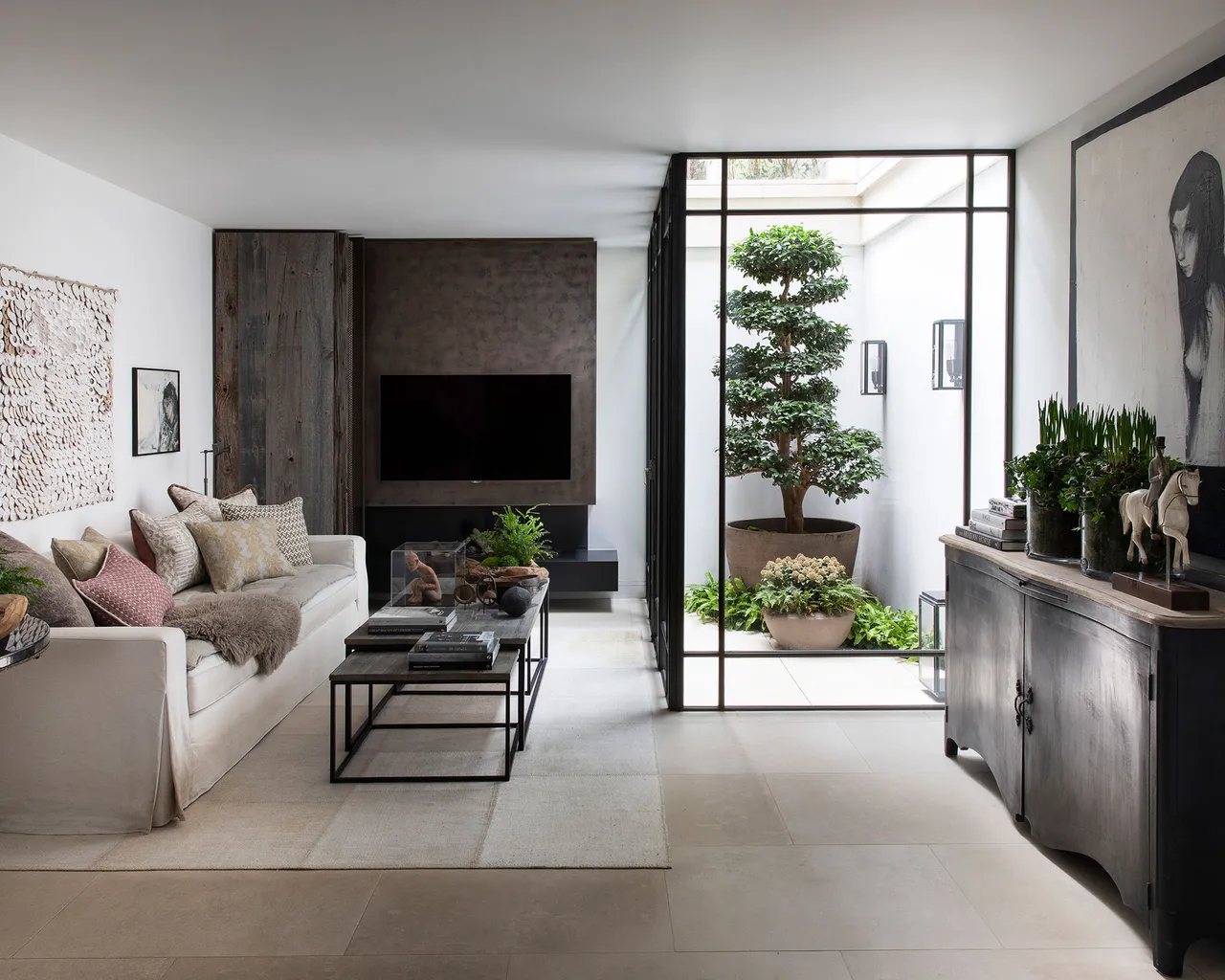
Scandinavian interior design is about functionality, so do consider bespoke, built-in cabinets, clever laundry room storage solutions and slimline seating to maximize every inch of space.
An ideal solution could also be hidden shelving or ‘pull out’ cabinet, which does not encroach on living or cooking space – and can be opened and closed away as required. Not only will this ensure an orderly, calm area, but less fuss also means you’ll be more able to relax and unwind.
9. Mix styles and trends
(Image credit: Tessa Neustadt)
Give Scandinavian design a maximalist lift by pairing it with Bohemian living room ideas. ‘Boho is one of those styles that is completely unique and able to be interpreted in so many ways,’ says Bobby Berk. ‘And for me, the most interesting and unexpected take is combining Boho with serene Scandinavian style for a truly 21st-century twist.’
‘At the heart of this look is an eclectic mix of materials, patterns and eras. So when going modern, you still want to embrace those wide-ranging references, but instead of going maximal it’s about being selective. Limiting your color palette to tone-on-tone is a good place to start, whether it’s going with warmer or cooler shades. And bringing in white, black and wood tones will also help to amp up the modern feel.’
‘For art, consider a large abstract painting or photograph to add visual interest. You could also opt for a framed textile to bring in something more eclectic. Accessories should also follow suit, with globally sourced items sitting next to simple ceramics and sleek pieces. Even the greenery you add can enhance the Scandinavian mood. Choose a large plant like a fiddle leaf fig that will bring in a sculptural feel.’
10. Decorate with natural materials
(Image credit: Paul Raeside / Future)
Bringing nature indoors doesn’t only apply to plants. Use materials normally found outdoors and make them a part of your home’s interior décor. Wood, wicker, rattan and stone all work well to enhance a Scandinavian scheme.
Try adding natural elements into the home by decorating with natural materials such as wood, seashells, tree bark, flowers and feathers. The same feeling of being relaxed and free in nature can be brought into your home by stimulating the senses.
‘The joys of nature cannot be underestimated,’ lifestyle expert at Contura, Catharina Björkman. ‘We feel peaceful and more relaxed in the company of nature; plants, raw materials and ethereal color schemes remind us that we’re part of a much larger world – and that we’re privileged to share it with nature.’
‘There is also a possibility that natural materials may be good for our health,’ says Sebastian Cox. ‘Biophilic design has a set of clear principles, one of which is to use natural materials to reconnect us to the natural world.’
What are Scandinavian colors?
Pale color palettes are best associated with Scandinavian décor ideas.
Subtle nuances of color are why James Thurstan Waterworth, founder of Thurstan, favours neutral colors in his Scandinavian-inspired schemes because they create a soft springboard from which antiques, art and other embellishments are able to sing. ‘You can then build out from here with tactile surfaces, patterned textiles, eclectic furnishings and more modern flourishes to create layers of interest, while still allowing all the individual elements of the interior to breathe.’
‘I gravitate towards naturals palettes, and materials too, as for me they bring a certain timelessness and longevity to design.’
Home decoration is an art, and with great home decor stores available everywhere, it has now become really easy to get creative aesthetic decoration ideas and redecorate your home. A home is considered a temple as we live there with our loved ones, enjoying each …
Jeffrey and Debbye Mack traded just one tropical paradise for one more when they moved to Vero Seaside from the Caribbean. They ended up attracted to the dwelling at 2241 W. Ocean Oaks Circle mainly because it experienced the really feel of the West Indies …
This article is part of our Design special report previewing 2022 Milan Design Week.
Three years after its last full-scale event, Salone del Mobile.Milano, or the Milan Furniture Fair, returns in its 60th iteration. Over the decades, Salone, which is widely judged to be the world’s pre-eminent design fair, has evolved into a platform for about 2,000 international exhibitors and a laboratory for ideas about sustainability in design materials and manufacturing. This year, the fair includes “Design with Nature,” a 15,000-square-foot installation offering a “virtuous” vision of the future of home living. SaloneSatellite, a launchpad for young talent, which is returning for its 23rd year, has invited more than 600 participants to reflect on design that fosters “autonomy, comfort, movement, usability, interaction and safety for all” in a show called “Designing for Our Future Selves.” Other exhibitions at the fairgrounds in the Milanese suburb of Rho are devoted to offices, kitchens, bathrooms and decorative housewares.
Salone anchors Milan Design Week, with hundreds of concurrent displays of furniture, textiles, tabletop objects and lighting in almost every pocket of the city. The fair and many of the surrounding events continue through June 12. What follows are some highlights.
New Function for an Ancient Form
La Mura (The Wall), a modular seating system first produced in 1972, is the latest project by Mario Bellini to be revived. Mr. Bellini, one of Italy’s greatest architects and givers of forms — 25 of his designs are in the permanent collection of the Museum of Modern Art in New York — was inspired by ancient buildings when he created the monolithic sectional.
“In my projects, one can often find a clear allusion to architectural elements,” he said in an email. He changed the original only by putting more emphasis on the buckles and hinges that join the modules together, “to give grit to the project,” he said, adding, “A timeless piece remains contemporary in design but evolves in material.”
Tacchini, the current manufacturer, uses cold foam — a highly elastic polyurethane — combined with memory foam and iron inserts to update the sofa’s construction. La Mura will be shown at the Milan Furniture Fair and from Tuesday through June 12 at the Spazio Maiocchi exhibition space at 7 via Achille Maiocchi; tacchini.it
Design Concepts Forged in Fire
In a time of climate change, is there still room for optimism? Baillie Mishler and Lauryn Menard, the founders of the Oakland, Calif., design studio Prowl, would like to think so.
“The earth is resilient,” Ms. Mishler said. “And in the California wildfire narrative, burnt earth is rich with nutrients and builds upon itself again — as something different — but still life prevails.”
This notion of a silver lining inspired a lounge furniture collection that Prowl will present at Alcova, an exhibition of independent design at different sites in Milan during Design Week. The environmentally focused company used sustainable materials and worked with the Amsterdam manufacturer ByBorre, incorporating 3-D knit technology to create computer-generated upholstery for a sleek chair and a stool. The dark, textured fabrics drape a stainless-steel base; one has imagery evoking charred earth, while the other features a swirling pattern representing forest regrowth.
The pieces, which are not for sale, are displayed to encourage sustainable practices and possible licensing of the designs. On view from Monday through June 12 at Casa Delle Suore, Via Simone Saint Bon 1; alcova.xyz
Four Designers Interpret the Theme of Etiquette
In 1919, Mario Buccellati, a goldsmith from Ancona, Italy, opened his first boutique, attracting aesthetes like the poet-nationalist Gabriele D’Annunzio. That same year, Piero Portaluppi, a prolific architect best known for the Villa Necchi Campiglio in Milan (a luscious setting for Luca Guadagnino’s film “I Am Love,” as well as for Ridley Scott’s “House of Gucci”), designed a six-story modernist office building in a historic part of the city.
Now that building is Buccellati’s headquarters and the site for a show of the jewelry company’s tabletop items. The objects, including four existing silver-service patterns and new porcelain that was designed with Ginori 1735, will be arranged in four vignettes created by eminent designers — Dimore Studio, Ashley Hicks, Chahan Minassian and Patricia Urquiola — who are interpreting the theme of etiquette. Stefano Boeri Interiors outfitted the exhibition space and the terrace just outside it with mirrored surfaces and greenery to reflect and refresh the surrounding skyline.
“The result of all of this, I hope, will be quite an immersive experience,” Mr. Boeri said by phone from Milan. On view through June 12 at Via Brisa 5; buccellati.com
Illuminating Matisse’s Art
Maison Matisse, the company founded in 2019 by Jean-Matthieu Matisse, a great-grandson of Henri Matisse, has collaborated with designers like Alessandro Mendini, Jaime Hayon and Ronan and Erwan Bouroullec to perpetuate the artist’s philosophy. Now, to celebrate Matisse’s paper cutouts, a late chapter in his career, Andrea Trimarchi and Simone Farresin, the founders of the Milan-based studio Formafantasma, have designed a collection of limited-edition lights, called Fold, that reinterprets these creations with steel, LED tubes and cut paper.
“We wanted to look into Matisse’s process and how it intersected with our work,” Mr. Farresin said. While the results are more geometric than Matisse’s organic shapes — most feature 90-degree angles, except for a sinuously curved wall light — some, like a red floor lamp (above), are coated with the artist’s rich colors, a departure for the designers. “We intersected in our use of paper,” Mr. Farresin said.
The show can be seen through June 12 at Studio Nerino, Via Santa Marta 21. maison-matisse.com
Lara Bohinc’s Furniture Celebrates the Body
Lara Bohinc, a Slovenian-born designer, is showing new furniture based on a voluptuous female form at the Alcova exhibition during Milan Design Week. And just in case that inspiration is not obvious from the billowing curves and creases, she is making her mission clear with the collection’s name: Peaches.
“I’m lucky I’m not a man,” Ms. Bohinc said by phone from her home base in London. “I would have to be very, very careful” about inviting people to sink into the provocative seating. “But because I’m a woman,” she explained, “I can celebrate my own body. It’s the difference between objectifying something and celebrating something.”
Having worked as a jewelry designer in the fat-shaming fashion industry for many years, she added, she was especially keen to honor a woman’s “flesh and folds” and encourage acceptance of the body, “with all its faults.” She called it a “happy coincidence” that the pieces — two armchairs and a pouf — will be presented in an abandoned nunnery, under a portrait of a former pope. After all, the furniture signifies a replacement of antiquated values with modern progressivism. And why would the pope be offended?
The pieces are “not naked,” Ms. Bohinc said. “They’re nicely covered in upholstery.” On view through June 12 at Casa Delle Suore, Via Simone Saint Bon 1. bohincstudio.com
Light Based on Sound
The furniture Andrés Reisinger creates isn’t always intended for the physical world. This Barcelona-based digital artist, who was born in Argentina, is perhaps best known for realistic renderings of petal-covered chairs and undulating couches that seem to defy Newtonian laws. Mr. Reisinger has sold these projects as NFTs, or nonfungible tokens, but during Milan Design Week, he will bring his dreamlike furnishings into reality with a collection of light fixtures inspired by 1960s free jazz.
The four pieces, which Mr. Reisinger calls “illuminated sculptures,” will be exhibited at the Nilufar Depot design gallery in the office of its founder, Nina Yashar. Made of metal and wood and each topped with a glowing glass orb, the designs represent jazz’s improvisational nature with their varying heights and shapes. Each sculpture seems to suggest its own song.
Mr. Reisinger said he initially envisioned the pieces in a room akin to a musician’s rehearsal space, low-lit and smoky, so the office will be outfitted with rippled metal sheets for a hazy effect. He said he was also planning a soundtrack, recorded by a jazz trio, “with errors, with stops, with hiccups and all the things that life, and also the free jazz movement, was empowering.”
Price available upon request. On view through June 11, Viale Vincenzo Lancetti 34.
Celebrating an Eames Who Was Overlooked
Lucia Eames (1930-2014), a sculptor, photographer and artist, was the only child of the designer Charles Eames and his first wife, Catherine Woermann. Never as well known as her father and stepmother (Charles’s second wife and design partner, Ray Eames), she did not receive much attention for her prolific output. But now her own children are highlighting her career and seeking a market for her creations with a show called “Seeing With the Heart,” which runs during Milan Design Week.
“There was a juicy, rich, exuberant trove,” said Carla Hartman, one of Lucia’s five offspring, who are all involved in the endeavor, along with Form Portfolios, a licensing company based in Denmark. “We could see that an exhibition was needed,” she said in a video call. “We felt it was important to show it in a cultural venue before commercial releases, and Milan was the perfect place.”
The exhibition, above a shop in the city’s Brera district, fills four rooms with paper butterflies, industrial furniture and hand-cut metal sculpture. A video shot by Lucia’s son Eames Demetrios documents his mother’s work with a combination of archival and new footage. Like the senior Eameses, Lucia reveled in the art of repetition — her children discovered that she had drawn 740 suns, each different. Ms. Hartman said she and Mr. Demetrios hoped to see them adorning a shower curtain in the near future.
Galerie Philia, which deals in contemporary design and art, is presenting the first limited-edition works by Studiopepe, the Milan design agency founded by Arianna Lelli Mami and Chiara Di Pinto. Studiopepe’s collection, Temenos, will be installed in a former Necchi sewing machine factory in the Baranzate district outside Milan. The designers collaborated with the Luigi Pigorini National Museum of Prehistory and Ethnography in Rome on research into the ways that the function or purpose of an object can be changed by the symbolism attached to it.
Among the pieces on display will be thronelike, sculptural chairs in charred wood; tubular concrete lights; and a low table (above), made of tiered slabs of onyx, on what the designers call two “triangular prisms” of charred wood. Ms. Lelli Mami and Ms. Di Pinto said in a statement that they “wanted to create an alphabet with our works” and acknowledge their admiration for 20th-century art and design masters like Constantin Brancusi, Isamu Noguchi and Le Corbusier. On view through June 12 at Baranzate Studios, Via Milano 251, Baranzate. galerie-philia.com
Moving From Fashion to Furniture
Paul Smith, the British fashion designer who made stripes sexy, customized suits for David Bowie and finds time to write a column for the Italian architecture magazine Domus, has now ventured into designing furniture for the company De Padova.
His new Everyday Life collection of sofas, armchairs and poufs bears such personal hallmarks as luxurious, textured fabrics and vivid color.
“It’s a dream come true,” Mr. Smith said, referring to joining a cohort of storied designers for this Milanese furniture brand, which merged with the kitchen and bath company Boffi in 2015. Among his forerunners are Vico Magistretti and Achille Castiglioni, in whose company he said he was humbled.
The seating, Mr. Smith added, was designed for comfort and durability — like clothes, only more so. The environmentally minded upholstery is woven from hemp, cotton and nylon in hues of peacock, deep blue, red and lime green. The cushions are filled with organic cotton and recycled feathers.
Contrasting exposed stitching is a stylish sartorial detail, as are leather straps attached to the wooden frames.
Everyday Life will be introduced at De Padova’s showroom at an exhibition from June 7 through 12 celebrating Mr. Smith’s career. depadova.com
Making a Classic More Crystalline
The Italian lighting brand Flos was founded in 1962, the same year that Arco — the floor lamp designed by the brothers Achille and Pier Giacomo Castiglioni, and one of the company’s most famous products — also made its debut. The exhibition “See the Stars Again,” created by the studio Calvi Brambilla at the industrial space Fabricca Orobia in Milan, will show new lights, including Arco K, a limited-edition version of the Castiglionis’ celebrated design.
Instead of a marble base, which the original had, this lamp’s will be made of a lead-free crystal used for optical prisms. This material, which reveals the model’s inner workings, is cut very precisely to discourage knockoffs. A wood support, which looks like a rolling pin, can be inserted into a hole in the base to carry the light from one place to another — an update on the broomstick that the Castiglionis first recommended. Purists may gasp, but the future is clear. On view from Tuesday through June 24 at Via Orobia 15. flos.com